


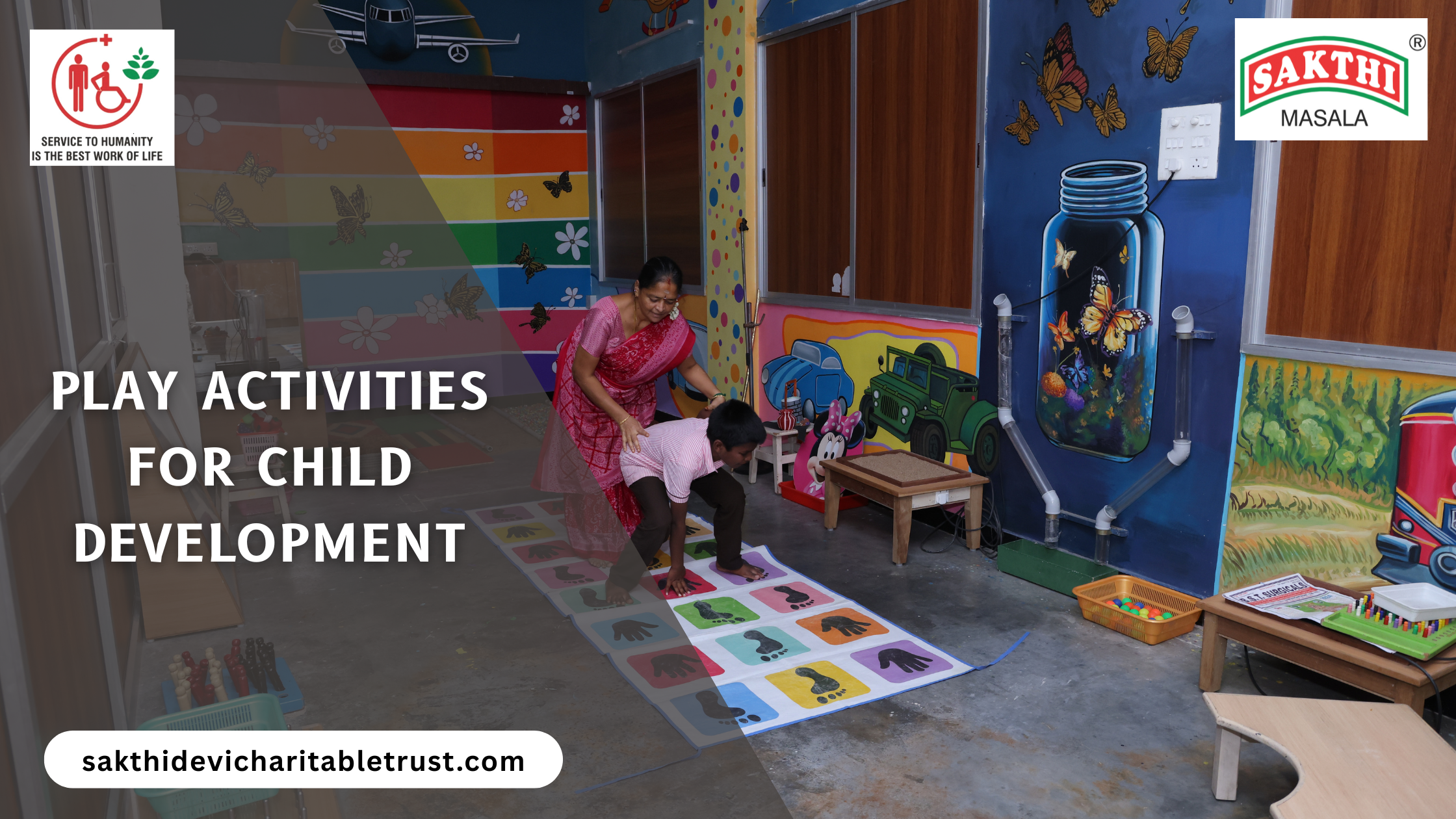
Simple play at home can help children practice movement, communication, attention, and everyday participation. Play activities for child development work best when they are enjoyable and matched to the child’s interests and current abilities rather than treated like a formal lesson.
Sakthi Devi Charitable Trust uses child-friendly, personalized support that encourages learning through play and interaction. Its home-routine guidance mentions matching pictures, sorting objects, drawing, music, and simple household tasks as familiar learning opportunities. These ideas can make everyday moments useful without recreating therapy at home.
Simple Play Ideas Parents Can Try
Try one activity at a time:
- Sorting and matching: Use colors, shapes, pictures, or familiar objects.
- Ball games: Rolling or catching can support motor coordination.
- Picture naming: Familiar pictures can encourage communication practice.
- Drawing and coloring: Support attention and hand use.
- Turn-taking games: Passing an object can build social interaction.
- Sand or texture play: When suitable, this can offer sensory engagement.
Parents can explore Supporting Special Children: Learning, Skills & Development for more ideas on learning, daily routines, therapy support and child development.
How do play activities for child development support learning?
They give children repeated chances to practice useful abilities in a familiar, low-pressure setting. Through simple games, a child may work on movement, attention, communication, thinking, or interaction while staying engaged.
|
Play Activity |
Skill It Supports |
|
Sorting & Matching |
Thinking + attention |
|
Ball Play |
Motor coordination |
|
Picture Naming |
Communication |
|
Drawing & Coloring |
Hand use + attention |
|
Turn-Taking Games |
Social interaction |
| Sand / Texture Play |
Sensory engagement |
Sakthi’s Rehabilitation Centre describes its approach as personalized and notes that child-friendly spaces encourage learning through play and interaction. Therapy goals are based on individual assessment, so home play should support not replace professional recommendations when a child is receiving therapy.
Parents can also explore Brain-Building Through Play from Harvard University’s Center on the Developing Child for practical ideas on using play to support children’s learning and development.
| Follow the child’s interest, demonstrate one step, give time to respond, and keep the activity short enough to stay enjoyable. |
When choosing play activities for child development, the aim is not to complete more games. Choose something the child can understand, repeat, and gradually take part in with less help. If the child becomes tired or overwhelmed, pause or return to a familiar activity instead of forcing the task.
Play can also be combined with everyday learning, and Life Skills Activities for Special Children to Build Independence offers practical ideas for developing participation and independence.
Play-Based Support at Sakthi
Sakthi provides personalized rehabilitation, early intervention, special education, and therapy-based learning for children who need additional support. Its autism early-intervention program also includes sensory stimulation and approaches such as sand and color therapy.
Frequently Asked Questions
1. Which play ideas are easy to start at home?
Sorting, matching, drawing, picture games, ball play, and simple turn-taking are practical places to begin.
2. Should parents turn home play into therapy?
No. Home activities should remain simple and enjoyable. Follow professional guidance when specific therapeutic support is needed.
3. When should parents seek additional support?
If difficulties with communication, movement, sensory responses, attention, or everyday participation continue, a professional assessment can help identify suitable support.

 ADDRESS
  Phone Number
 EMAIL ID
Leave a Reply