

Everyday independence grows through small, repeated experiences such as eating, dressing, making choices, waiting for a turn, or putting belongings back in place. life skills activities for special children can turn these familiar moments into useful learning opportunities when they match the child’s abilities and pace.
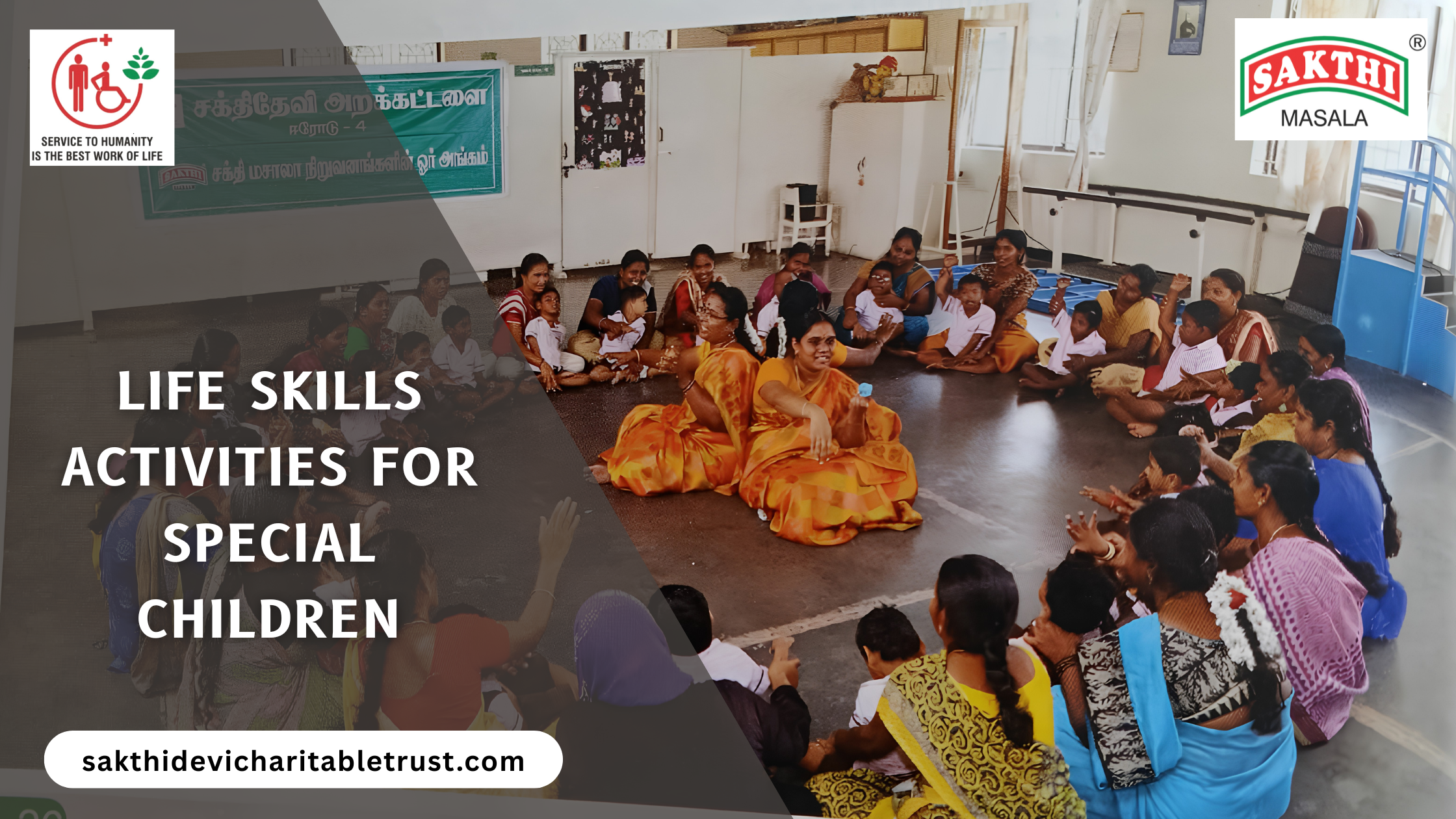
At Sakthi School for Intellectual Disabilities in Erode, practical learning is part of the program alongside special education and therapy-based support. Sakthi describes training in eating, dressing and toileting, plus basic money, time and safety concepts. Group participation also helps children practice sharing, waiting and turn-taking.
Everyday Abilities Worth Practicing
For children who need additional support with everyday activities and independence, parents can also learn about an Occupational Therapy Centre in Erode.
Parents and educators can begin with familiar tasks rather than introducing too many demands at once:
- Eating with suitable support
- Dressing one step at a time
- Washing and preparing personal items
- Putting belongings in their place
- Recognizing simple safety cues
- Waiting, sharing and taking turns
These everyday areas reflect the practical learning and independence-building approach described across Sakthi’s special-school and home-routine programs
Parents and educators can also explore research and professional perspectives on special education and child development through this rehabilitation and special education journal.
How do life skills activities for special children build independence?
They build independence by giving a child repeated opportunities to participate in everyday tasks, make simple choices and complete manageable steps with the right level of help. Sakthi’s approach supports this through daily living training and personalized teaching rather than expecting every child to learn in the same way.
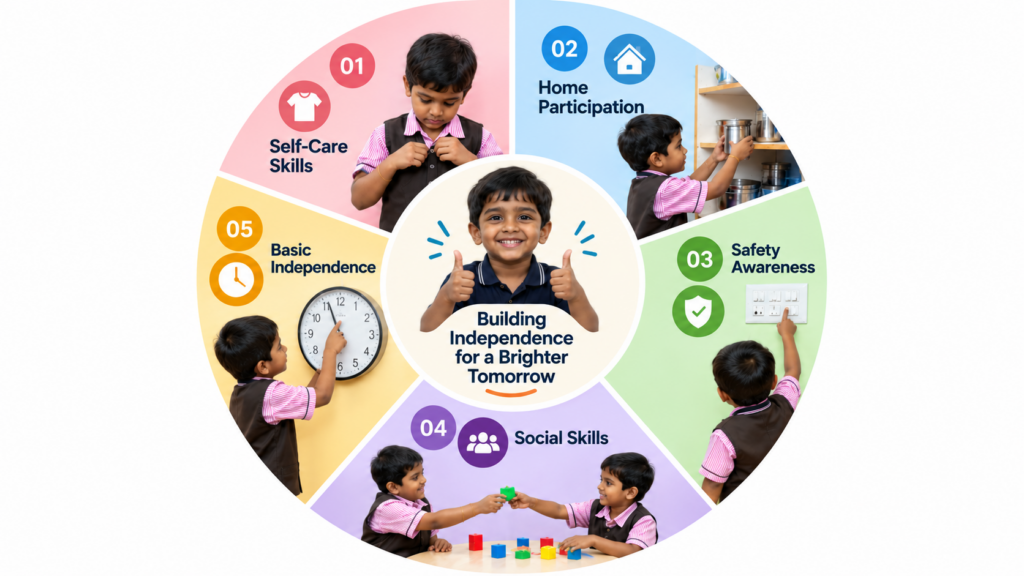
A parent might begin with one part of dressing, such as choosing clothes or putting an arm through a sleeve, before adding another step. This keeps self-care practice clear and achievable.
Learning for Independence at Sakthi
At Sakthi, life skills activities for special children are supported through practical learning, therapy-based support and individual teaching. Its published program also includes safety awareness, basic money and time concepts, and group experiences that encourage participation. Parents are guided on suitable ways to continue learning at home so familiar routines can be reinforced beyond the center.
The aim is not to complete every task quickly. It is to help the child take a meaningful part in routines at a level that suits them. Consistent parent guidance can help families choose manageable steps and notice small changes without comparing one child with another.
Parents can explore Supporting Special Children: Learning, Skills & Development for more information on learning, therapy, daily routines and development support.
FAQ
Which everyday tasks can be practiced first?
Start with eating, dressing, washing, organizing belongings or simple choices, based on the child’s current abilities.
Should parents practice everything at once?
No. One manageable step at a time can make a task easier to understand and repeat.
How does Sakthi support independence?
Sakthi provides personalized teaching, practical daily-living learning, therapy-based support and family guidance focused on independence, social participation and self-confidence

 ADDRESS
  Phone Number
 EMAIL ID
Leave a Reply