

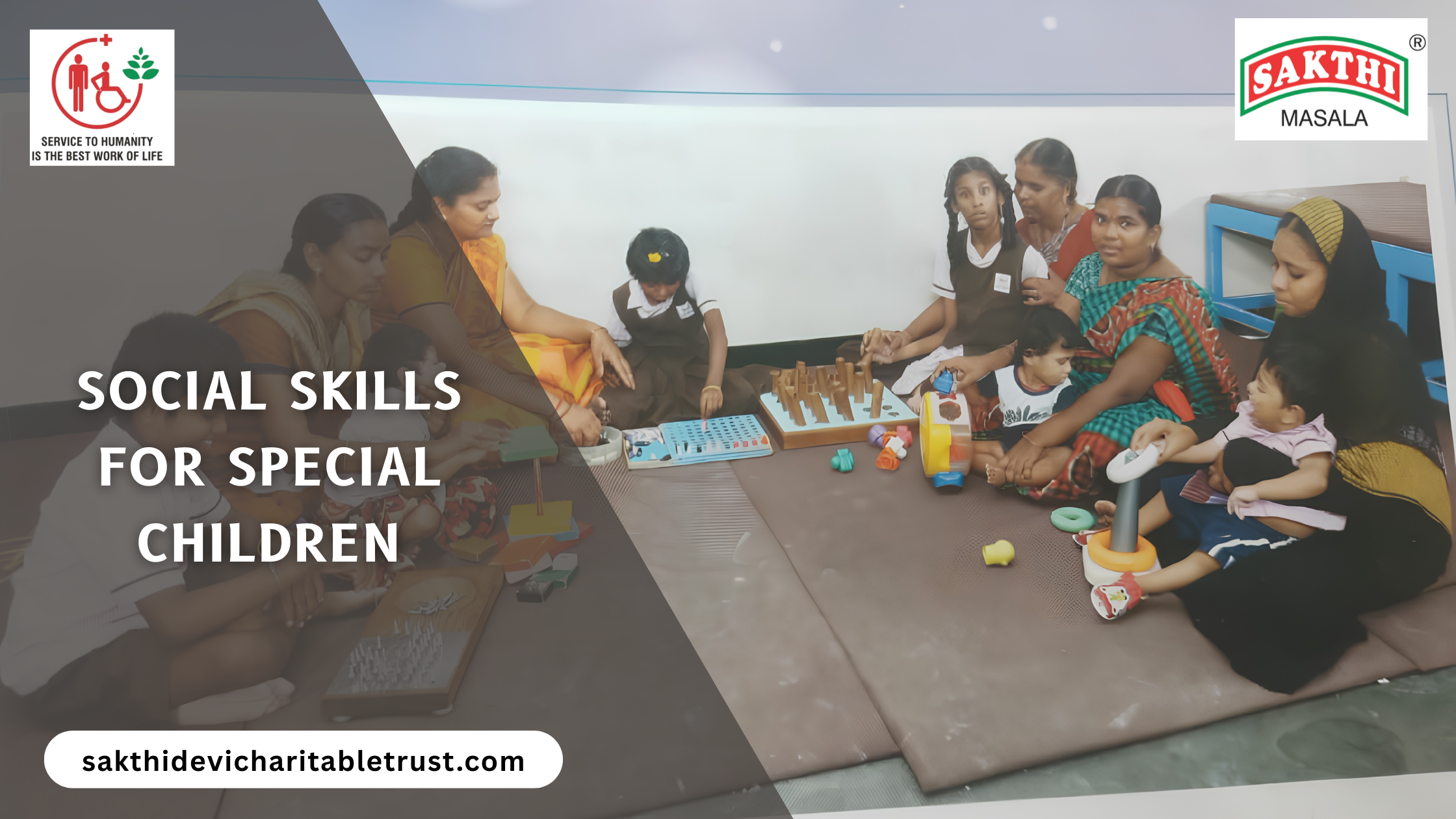
A child may enjoy being near other children but find it difficult to join a game, wait for a turn or express a choice. Building social skills for special children starts with noticing how each child already connects with others.
Words are only one way to communicate; gestures, pictures and actions matter too. Everyday games offer gentle opportunities to connect. At Sakthi School for Intellectual Disabilities, group activities include sharing, waiting and turn-taking alongside individualized teaching.
Start with Simple Shared Activities
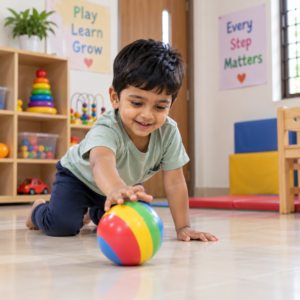 |
Roll a ball Send it towards your child, wait for a return, then invite another person to join.
|
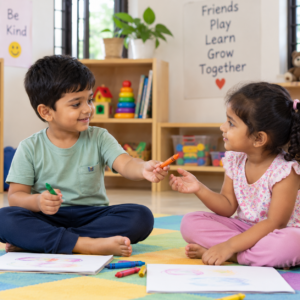 |
Share materials Offer two crayons and model giving one to a play partner, without forcing sharing.
|
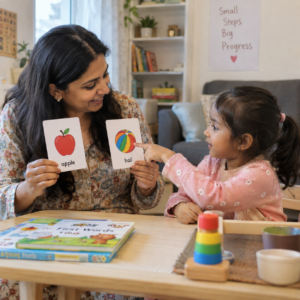 |
Make picture choices Show two familiar pictures and respond when your child points, gestures or speaks.
|
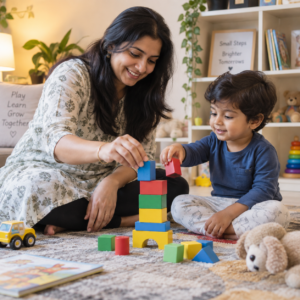 |
Try turn-taking games Use a clear “my turn, your turn” cue with blocks or a favourite toy.
|
Choose something your child enjoys. Pause for their response.
Simple play can also create opportunities for children to practise interaction, communication and turn-taking. Parents can explore Best Play Activities for Child Development at Home for easy activities to try.
How Can Social Skills for Special Children Be Built?
Start with short, enjoyable interactions, model one action and allow enough time for a response. Gradually create opportunities for peer interaction when the child feels comfortable. The aim is meaningful connection, not perfect performance or forced eye contact.
For example, during snack time, show two options and let the child choose through speech, pointing or a picture. Respond to that choice so the exchange has a real purpose. This is simple communication practice within a familiar routine.
| Parent tip
Celebrate an attempt to connect, even if it is a gesture or a brief shared moment. Pause when your child needs a break. |
Parents can also find more ideas for encouraging communication, cooperation and interaction through social skills activities and games for kids from Positive Action.
Social Learning at Sakthi
Sakthi describes individualized teaching and group activities that encourage sharing, waiting and turn-taking. For families exploring social skills for special children, its published approach connects group participation with practical learning and therapy-based support. These are opportunities to practice interaction, not promises of a fixed outcome.
Small, repeated moments at home can complement a child’s individual learning plan. Families can ask educators which activities suit their child and adapt them to the child’s interests and comfort.
Parents can explore Supporting Special Children: Learning, Skills & Development for more guidance on learning, communication, daily routines and development support.
Frequently Asked Questions
1. What can parents try first?
Begin with a favourite toy, practice one short exchange and give the child time to respond.
2. Can children connect without speaking?
Yes. Pointing, gestures, pictures and other communication methods can support meaningful interaction.
3. What does Sakthi offer in this area?
Its special-school content describes individualized teaching and group activities focused on sharing, waiting and taking turns.

 ADDRESS
 Phone Number
 EMAIL ID
Leave a Reply