


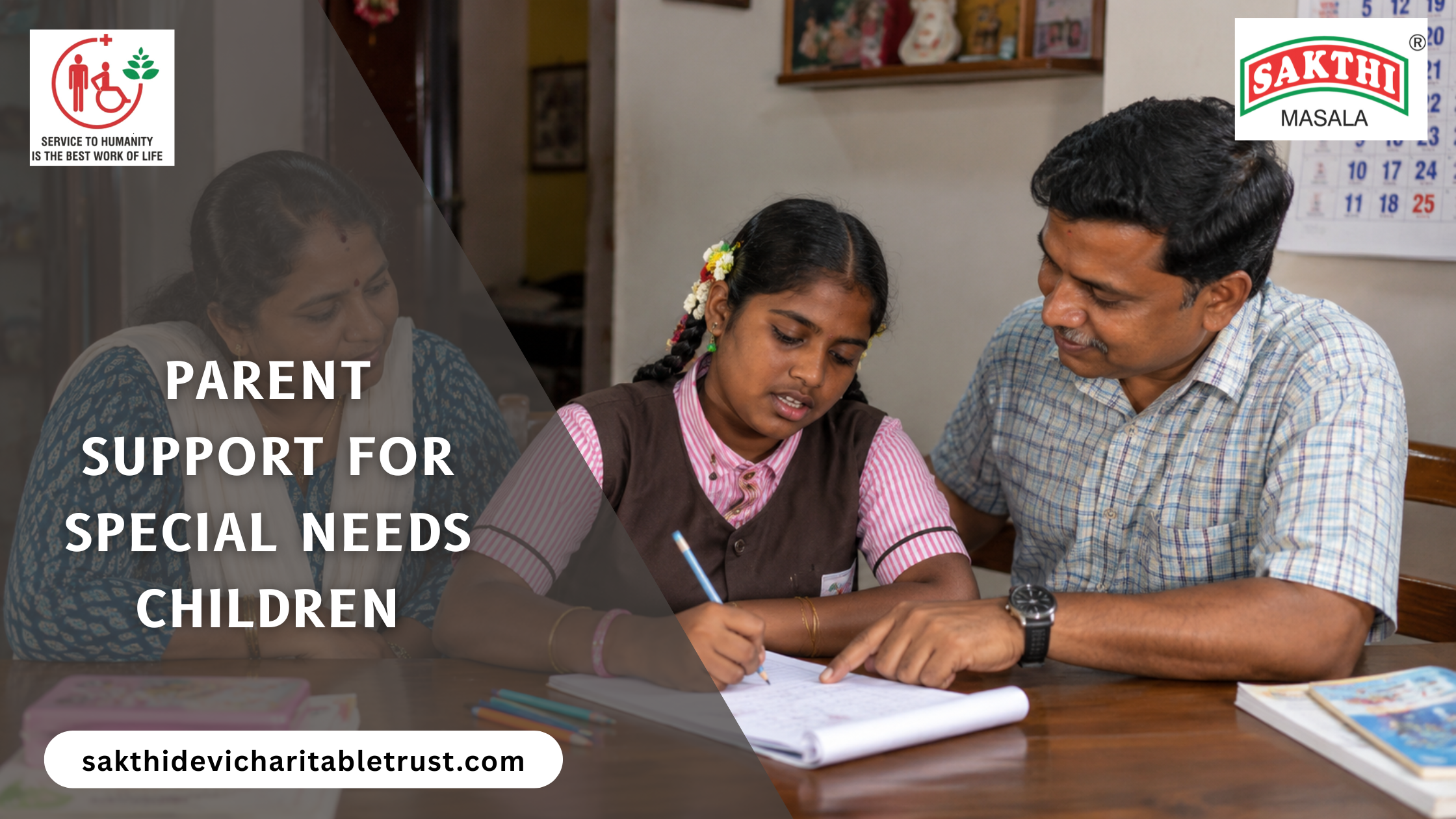
Children spend only part of their day with teachers or therapists. The rest of their learning happens through conversations, choices, play, meals and everyday experiences with family. That is why parent support for special needs children is important: parents notice what motivates their child, where they struggle and which small changes are happening outside structured sessions. When those observations are shared with professionals, learning goals can become more practical and consistent. Strong family involvement is not about becoming a therapist at home. It is about understanding the child, encouraging participation and helping useful skills carry into real life.
“Professionals may guide the path, families help the child use those skills in everyday life”
What Difference Can Parents Make Between Sessions?
A child may practice communication, self-care or social interaction during a session, but confidence grows when the same skill has a natural place outside it. parent support for special needs children can help by creating simple opportunities to try, respond and make choices without constant correction.
Parents can:
- notice what makes an activity easier or harder
- give the child enough time to respond
- celebrate effort and small achievements
- share useful observations with the teacher or therapist
Parents can also explore our guide on Supporting Special Children: Learning, Skills & Development for more information on learning, daily skills, therapy support and child development.
This kind of home learning should feel like part of life not extra homework. UNICEF similarly encourages families to focus on what a child can do and build from those strengths.
How Can Parents Support for Special Needs Children ?
Helping too quickly can sometimes remove an opportunity to try. Instead, give only the amount of assistance needed: demonstrate a step, offer a cue, then wait. This keeps parent support for special needs children focused on participation rather than dependence.
Parents can also learn more about creating predictable and flexible routines for children with additional needs through this guide on routines for children with disability and autism.
Good caregiver guidance can help families know when to encourage, simplify a task or try another time.
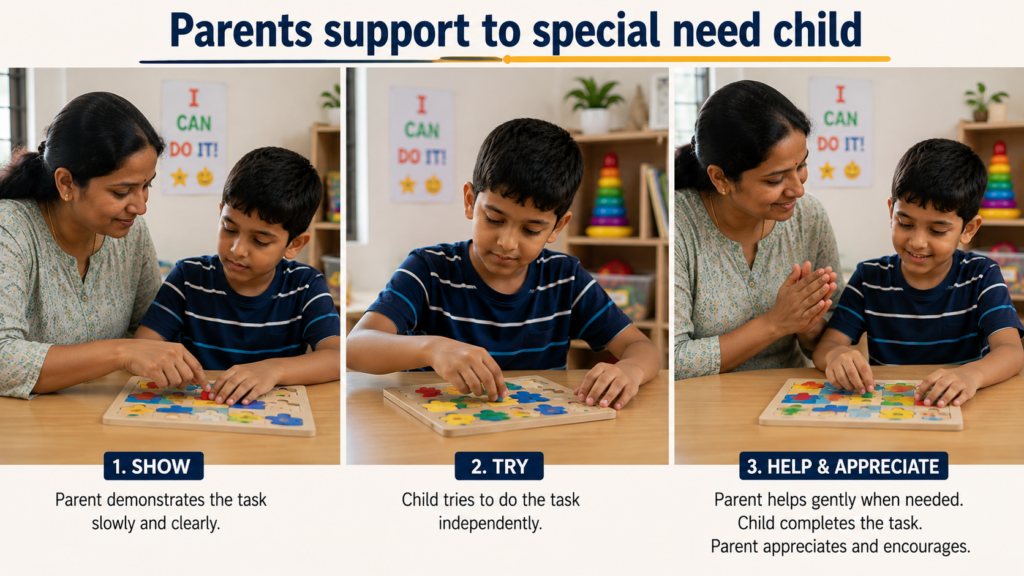
Useful updates include a word or gesture, a task completed with less help, a difficulty, or an activity they enjoy. These observations make developmental progress easier to discuss without comparing one child with another.
An individual learning plan can also work alongside therapy support, such as occupational therapy for children and adults, to develop practical skills and independence.
How Does Sakthi Work With Families?
At Sakthi Devi Charitable Trust in Erode, special education includes personalized teaching and life-skills learning. Its early-intervention services combine speech, occupational and behavioural approaches, with families guided on suitable activities to continue at home.
FAQs
Can parents replace a special educator or therapist?
No. Families can reinforce recommended goals, but assessment and therapy should remain with qualified professionals.
What if progress seems slow?
Notice small functional changes and discuss concerns with the child’s educator or therapist so strategies can be reviewed.

 ADDRESS
  Phone Number
 EMAIL ID
Leave a Reply