

How to Improve Government Schools in Rural Areas: Sakthidevi’s Kalam Library Model in Erode
Government teachers and parents often ask how to improve government schools in rural Erode when budgets, time and resources all feel limited. In many villages, classrooms are full, textbooks are basic and there is very little extra support for reading or thinking beyond the syllabus. This is exactly where Sakthidevi Charitable Trust’s Vazhikatti initiative and Kalam Libraries show that change is possible with simple, focused steps that fit the ground reality of rural education in Erode.
Why Libraries Matter for Rural Students
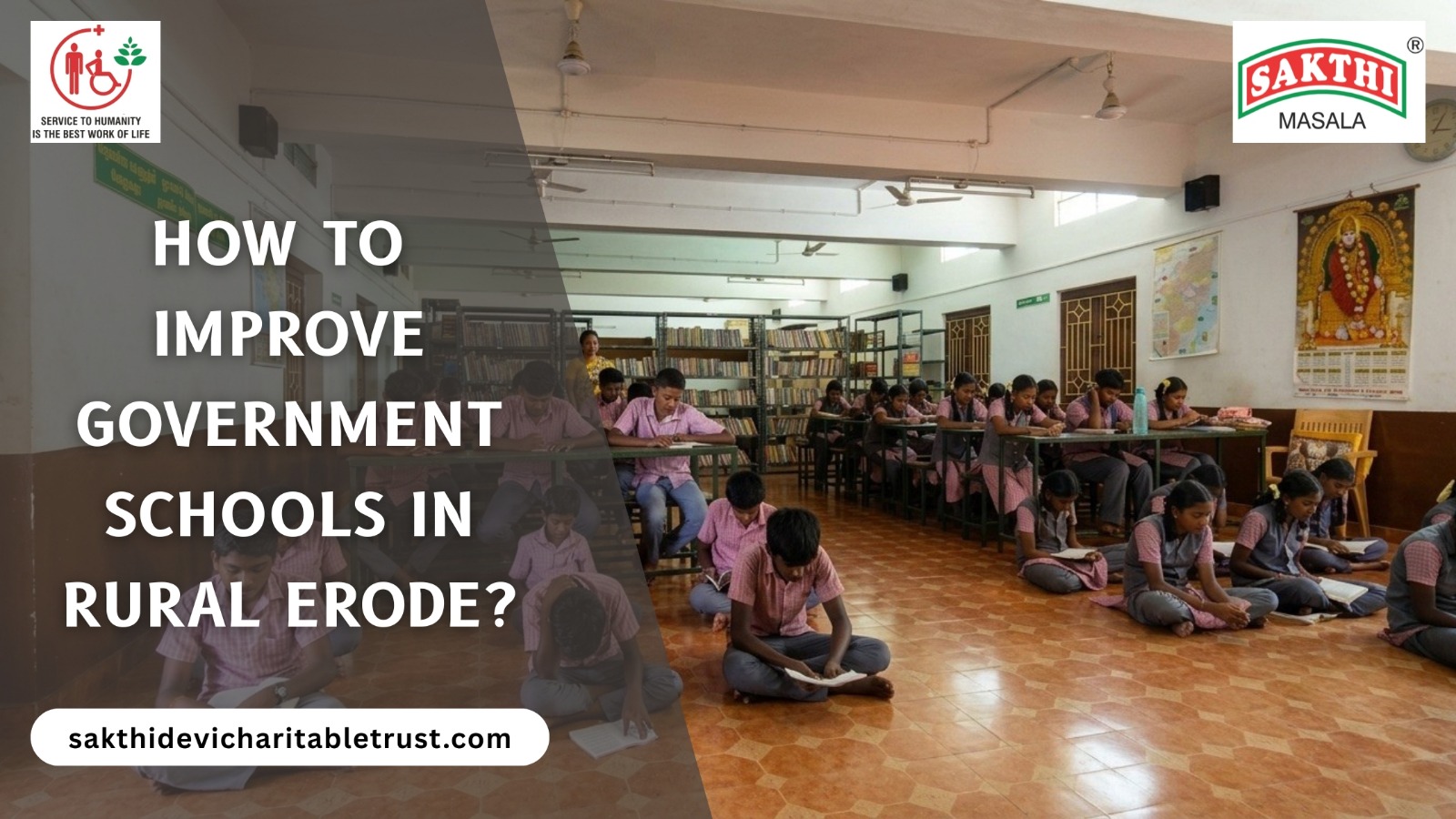
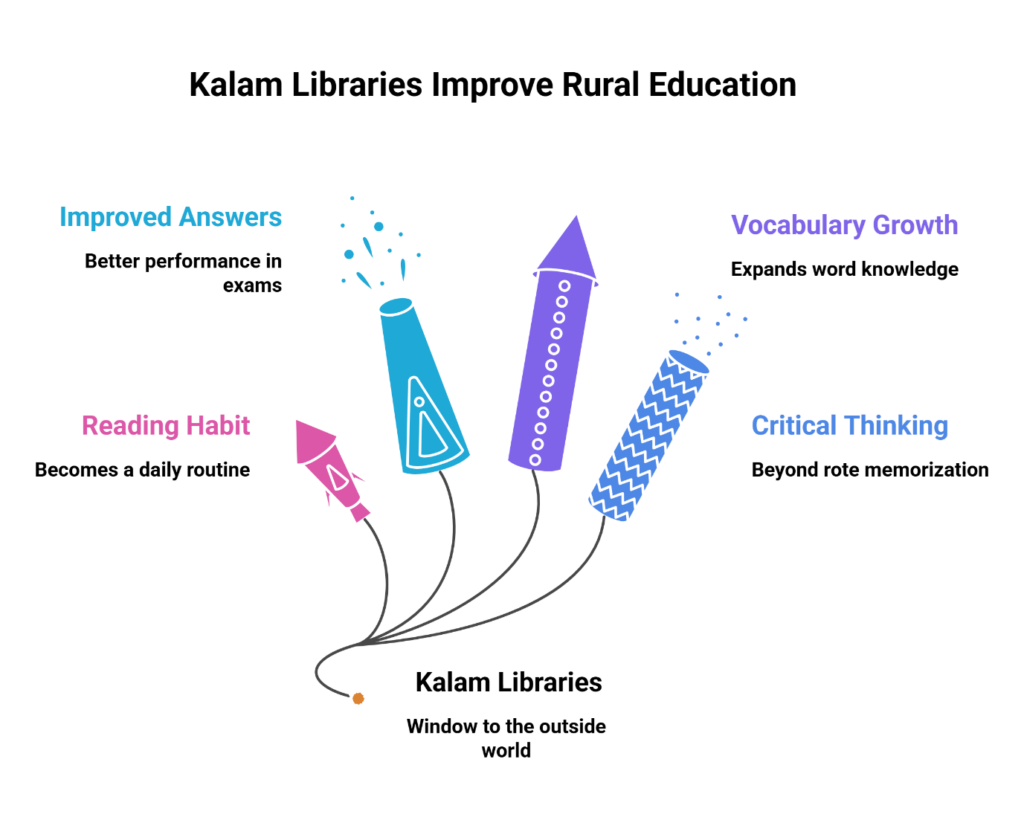
In rural schools, many children do not have storybooks, newspapers or reference books at home. A well-run school library becomes their only window to the outside world. Kalam Libraries set up by Sakthidevi act as:
- A quiet space for daily and holiday reading
- A source of newspapers and fresh books every year
- A place where shy students slowly gain confidence with words and ideas
When reading becomes a habit, exam answers improve, vocabulary grows and students start to think beyond rote learning, which is core to rural education in Erode.
How the Kalam Library Model Works in Erode
Under the Vazhikatti program, Sakthidevi Charitable Trust:
- Establishes Dr. A.P.J. Abdul Kalam Libraries in selected government schools
- Provides shelves, books and newspapers, and trains staff or volunteers to manage them
- Encourages regular library periods during school hours and access during vacations
This structure shows one clear answer to how to improve government schools in rural erode: make reading easy, free and part of the weekly timetable, not a rare extra.
Competitions, Skills and Confidence Building
Kalam Libraries are not only about silent reading. The Trust also links them with:
- Monthly drawing, essay and speech competitions for different class groups
- Simple leadership chances, such as student librarians or competition organisers
- Summer skill workshops and study support linked to the same schools
These activities turn libraries into active learning hubs and strengthen rural education in Erode by building communication, creativity and stage confidence.
Measurable Impact on Government School Improvement
Schools using this model report:
- Better reading habits and general knowledge
- Higher participation in class and school events
- Stronger exam performance and reduced fear of studies
For anyone wondering how to improve government schools in rural erode without huge infrastructure changes, the Kalam Library approach proves that steady, library-centred support can move results in the right direction.
Sakthidevi Charitable Trust’s Education Services in Erode
Through Vazhikatti mentoring, Kalam Libraries, leadership workshops, remedial coaching and higher-education guidance, Sakthidevi Charitable Trust offers a complete, school-focused support system for rural education in Erode. Its services are designed to fit government schools-strengthening reading, skills and confidence-so that every rural child has a better chance to learn well and move towards a brighter future.
 ADDRESS
  Phone Number
 EMAIL ID
Leave a Reply