

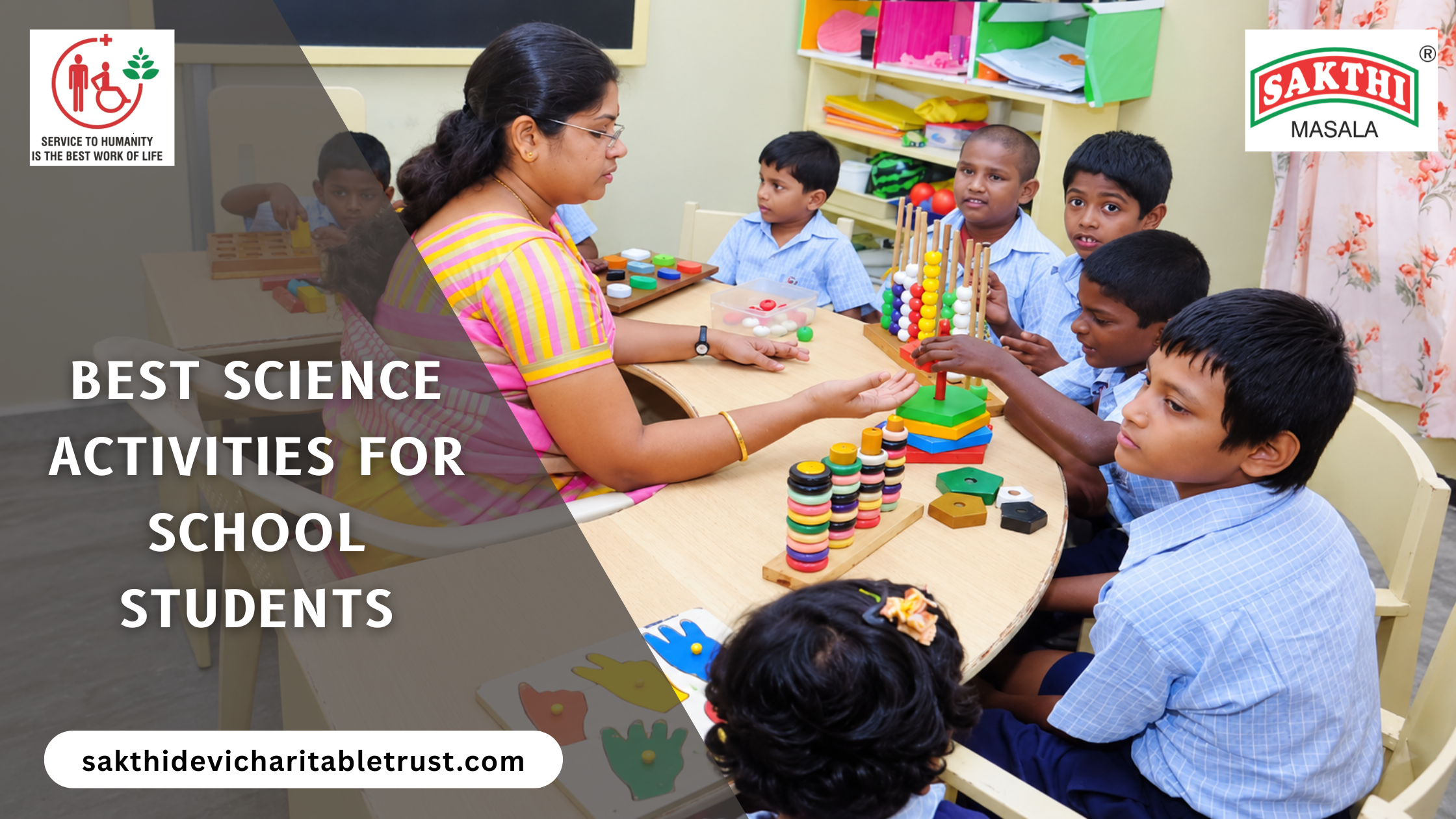
Looking for Science Activities for School Students? Simple, safe activities can turn materials into opportunities to observe, predict and ask questions. Instead of memorising concepts, students can test ideas and see what happens. This approach can build curiosity, confidence and problem-solving skills during everyday lessons at school and home.
Does hands-on learning help students understand science?
Yes. When students take part in an activity, they can see how a concept works instead of only reading about it. Predicting, testing and discussing the result can help them connect classroom lessons with real-world observations.
Why Does Learning by Doing Help Students?
Doing an activity gives children a chance to predict, test and explain. It can make an idea easier to understand and encourage students to ask “why?” rather than simply remember an answer.
Best Science Activities for School Students: Easy Ways to Learn by Doing
1. Try a Float-or-Sink Experiment
Place safe household objects in water and ask students to predict what will happen. After testing, compare their predictions with the results.
2. Explore Light and Shadows
Use a torch and an object to see how changing the light’s position changes the shadow. Children can draw what they observe.
3. Test What a Magnet Attracts
Let students test safe objects with a magnet and group them according to what they observe. Ask them to explain the pattern.
4. Keep a Seed Growth Journal
Grow a few seeds and record changes over several days. Drawing each stage can turn observation into a simple science journal.
Quick Tip: Ask “What do you think will happen?” before starting an activity. The prediction makes students think before they see the answer.
How Can Students Get More From a Science Activity?
The activity becomes more useful when students do more than watch the result. Encourage them to make a prediction, observe carefully, record what changes and explain what they think happened.
Turn Every Activity Into a Question
Ask:
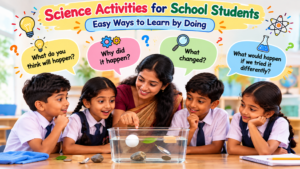
This simple approach helps children connect observation with reasoning and makes learning more active.
What Makes a Science Activity Effective?
A useful activity does not have to be complicated. It should be safe, age-appropriate and connected to something students are learning. Giving children time to make predictions and explain their observations can make the experience more meaningful.
How Can Schools in Erode Make Science Learning More Practical?
Schools can begin with small, age-appropriate activities using available materials and give students opportunities to ask questions before receiving an explanation. This connects naturally with Sakthi Devi Charitable Trust’s school education work including its focus on mentoring, interactive learning, curiosity and innovation.
Through its Vazhi Katti initiative and Kalam Libraries, Sakthi supports learning beyond routine classroom study. The Trust’s published programmes do not identify a dedicated science-experiment programme, so the connection here is to its broader approach of encouraging active learning, curiosity and educational development.
Frequently Asked Questions
Which science activity is easiest for school students?
A float-or-sink activity is a simple starting point because students can make predictions, test familiar objects and discuss the results.
Can science activities be done at home?
Yes. Many simple activities can be adapted for home using safe, everyday materials, with adult supervision when needed.
How can teachers make science activities more effective?
Ask students to predict first, observe what happens and explain the result in their own words. This makes the activity about understanding rather than simply completing a task.

 ADDRESS
 Phone Number
 EMAIL ID
Leave a Reply