


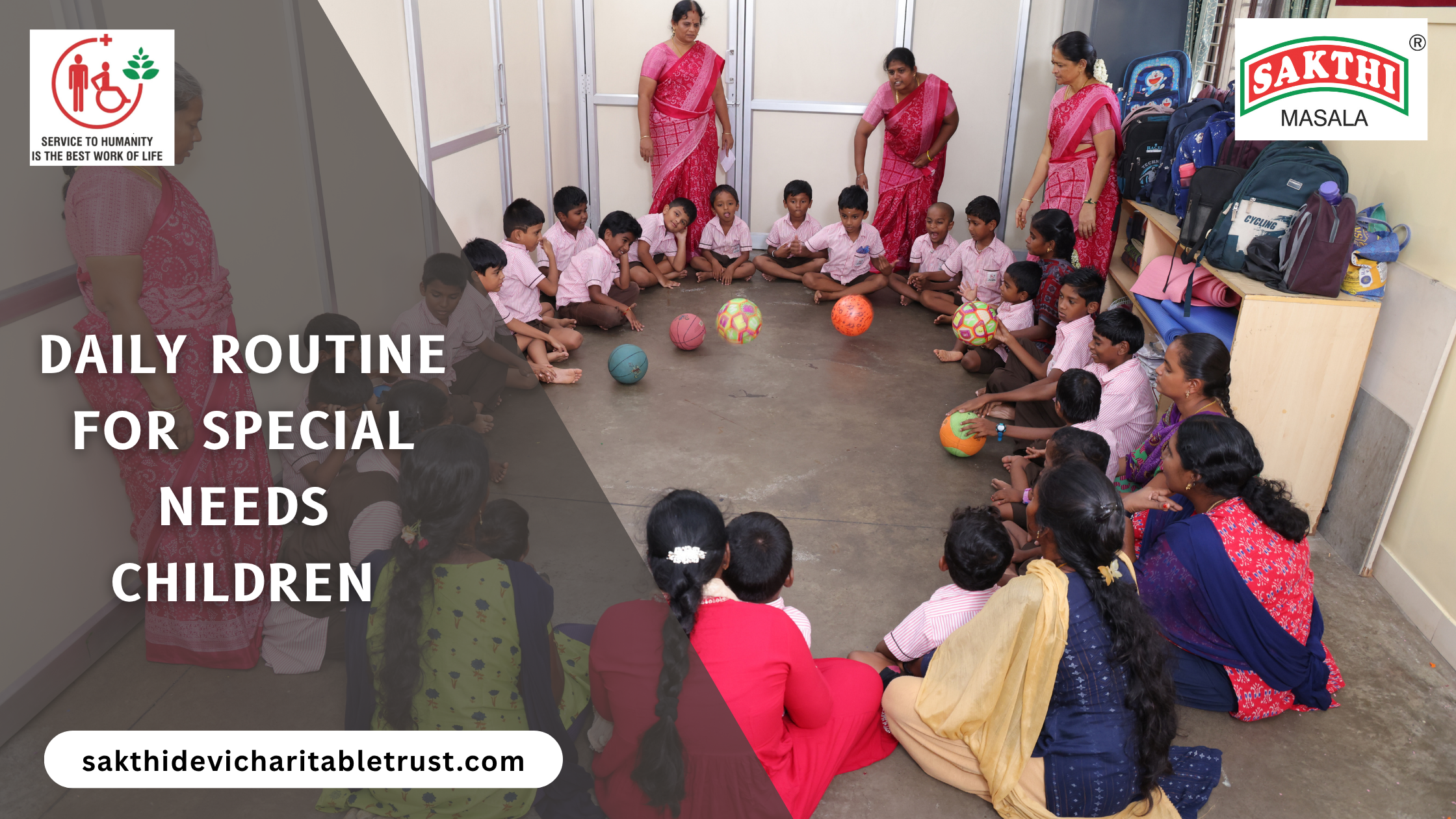
A predictable home schedule can make everyday activities easier to understand and repeat. The best daily routine for special needs children is not one fixed timetable for every family. It should match the child’s abilities, communication style, comfort and pace.
Sakthi Special School focuses on personalized teaching, life skills and therapy-based learning, while Sakthi’s autism programme support communication, behaviour and sensory integration.At home, parents can follow the same principle by keeping key activities familiar and giving one clear cue at a time.
Children who need additional developmental support can also benefit from learning about a Rehabilitation Centre for Special Children in Erode.

Tip : A visual schedule using pictures or simple words may also make the next activity easier to understand.
What Should the Morning Look Like?
Keep mornings short and repeatable: wake up, brush, dress and eat breakfast. Encourage the child to try one step before helping. Small, repeated opportunities can build independence skills without making the morning feel demanding.
Parents can also learn more about creating predictable and flexible routines for children with additional needs through this guide on routines for children with disability and autism.
Best Daily Routine for Special Needs Children
Use short blocks of learning, movement and play instead of expecting long periods of concentration. Matching pictures, sorting objects, drawing, music or simple household tasks can turn familiar moments into practice. If the child becomes restless or overwhelmed, sensory activities already recommended by their therapist such as calm movement or a quiet break may be included rather than forcing the next task.
| Time | Simple Home Focus |
|---|---|
| Morning | Self-care + breakfast |
| Midday | Learning + movement |
| Evening | Calm activity + bedtime |
What Should Happen After School or Therapy?
Give the child transition time before another demand. A snack, quiet play or a preferred activity can help them settle. Then practice one familiar skill suggested by the teacher or therapist instead of recreating a full therapy session. For the best daily routine for special needs children, this home practice should stay manageable.
| Sakthi’s programme also include parent guidance, helping families continue suitable learning and self-care practice beyond the centre. |
Keep the final part of the day predictable. Dinner, washing, preparing clothes or school items, a calm activity and a regular bedtime sequence can signal that the day is ending. Aim for consistency while allowing flexibility when the child is tired, unwell or overstimulated.
Sakthi Support Your Child’s Daily Development
A home routine becomes more effective when it matches the child’s individual learning and developmental needs. At Sakthi devi charitable trust in erode, children receive support through special education, early intervention, occupational therapy, speech support, behavioural training and life-skills activities. Parents are also guided on suitable activities that can be continued at home, helping learning remain consistent beyond the classroom or therapy session.
If your child needs additional support with communication, sensory needs, self-care or everyday skills, families can connect with Sakthi’s team to understand which programme may be appropriate after an individual assessment
For more ideas on supporting children at home, parents can also read Supporting Special Children: Learning, Skills & Development.

 ADDRESS
  Phone Number
 EMAIL ID
Leave a Reply