


What Is Colour Therapy for Autism? Benefits, Techniques and How It Really Works
Many parents first hear the phrase what is Colour Therapy for Autism? when they start exploring gentle ways to support their child at home or in school. Colour therapy does not replace speech therapy, occupational therapy or behavioural support, but it can make a child’s surroundings calmer, safer and easier to handle when used with care.
What Is Colour Therapy for Autism?
Colour therapy means using colours in a planned way to support a child’s feelings, behaviour and sensory comfort. Children on the autism spectrum often react strongly to lights and colours, so the right shades can help them relax, while harsh lights or very bright colours can cause stress.
Teachers, therapists and parents may use:
- Soft wall shades like light blue, pastel green or cream
- Warm, steady lights instead of flickering or very bright tubes
- Learning materials that are colourful but not crowded or confusing
In this way, the idea of what is Colour Therapy for Autism? becomes real by shaping the child’s room or classroom so it feels gentle on their senses.

Key benefits of colour therapy for autism
When colours are chosen thoughtfully, families often see small but meaningful changes over time. Some important benefits of colour therapy for autism are:
- Better relaxation in bedrooms, therapy rooms or calm corners
- Improved focus in table-top tasks or classroom activities
- Reduced sensory overload from bright lights and bold patterns
- More comfort when a child is surrounded by favourite soft colours
These benefits of colour therapy for autism may not be dramatic overnight, but they often support smoother days and fewer meltdowns for sensitive children.
Techniques: How Does Colour Therapy Really Work?
To understand what is Colour Therapy for Autism? it helps to look at simple steps any home or school can follow.
Common techniques include:
- Painting walls and choosing curtains in soft, calming colours
- Creating a “calm corner” with dim lights and gentle hues
- Using colour-coded visual schedules so tasks feel clear and predictable
- Avoiding too many bright, clashing colours or busy patterns in one space
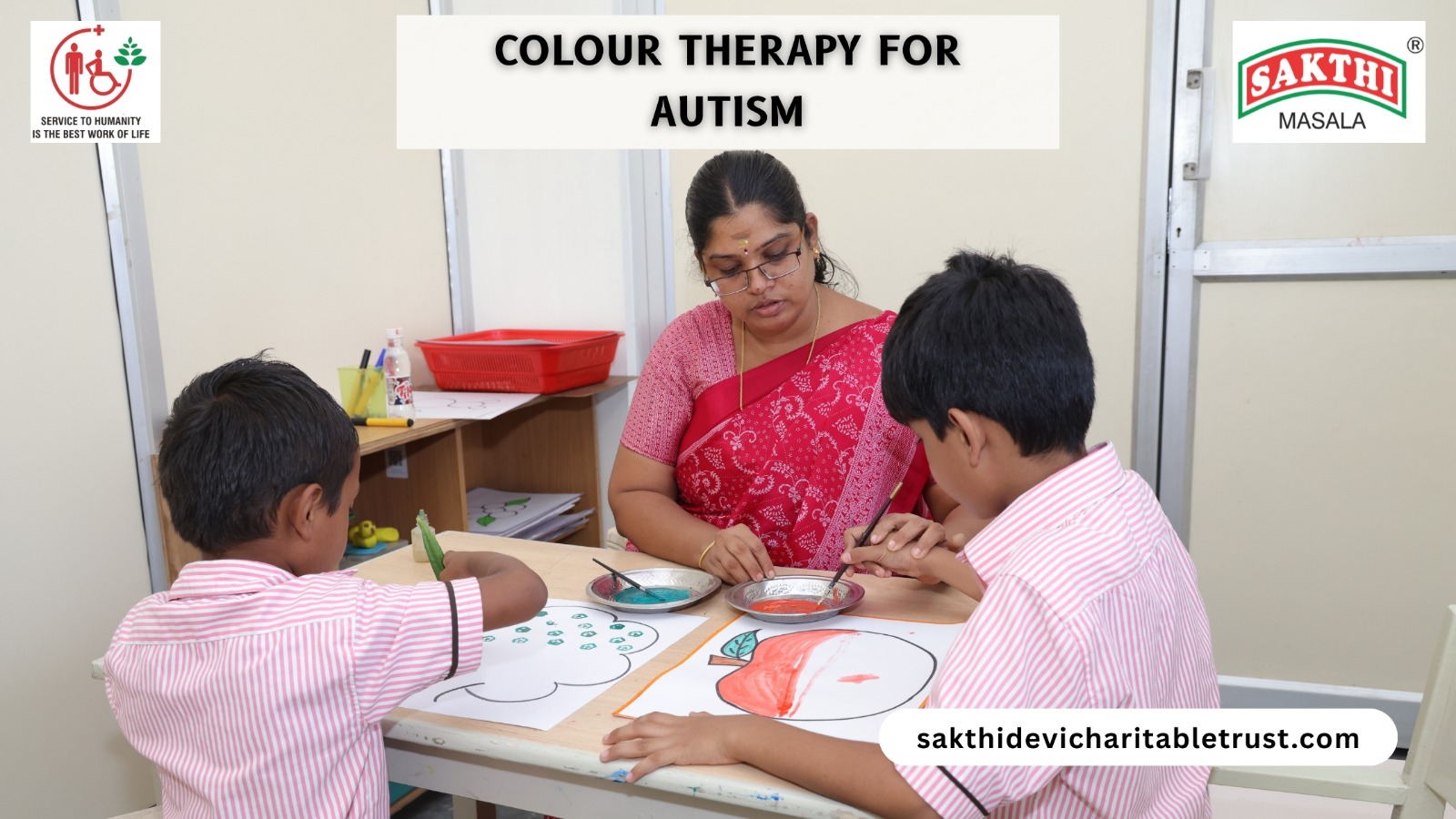
- Offering art and colouring time to help children express feelings and build focus
These methods turn colour into a quiet tool that supports emotional control and attention.

Role of Special Schools in Using Colour Therapy
A special school for autism can apply colour ideas in a structured way across classrooms, therapy rooms and sensory corners. Staff observe which colours calm each child and slowly adjust walls, lights and learning materials to fit that child’s needs.
At Sakthi Autism Special School and Sakthi Early Intervention Center for Autism under Sakthidevi Charitable Trust, trained teams focus on communication, behaviour and sensory comfort for young children on the spectrum. They combine colour-aware environments with speech therapy, occupational therapy and early intervention programs so each child can learn in a safe, steady and respectful space.
When Should Parents Consider Colour Therapy?
Parents do not need special tools to begin exploring what is Colour Therapy for Autism? at home. Watching how a child reacts to different colours and lights is the first step. If you see that softer colours and simple lighting help your child settle faster, you are already using colour in a helpful way.
If you want guided support, you can reach out to Sakthidevi Charitable Trust’s autism and special education services in Erode. Our special school for autism can help you plan colour, classroom setup and therapy together so your child can grow in a calmer, more comfortable learning environment.

 ADDRESS
  Phone Number
 EMAIL ID
Leave a Reply