

How Sensory Issues Affect Children with Autism: Colours, Stimming and Calming Room Ideas
Children with autism often experience the world as louder, brighter and more intense than other children, because their brains process sensory information differently – this is what we call sensory issues in autism. For many families in and around Erode, this shows up at home, in school, at shops, or even during temple visits: a child covers their ears for sounds others ignore, cries under bright tube lights, or melts down in crowded buses and markets. These reactions are not “naughty behaviour”; they are signals that the child’s senses are overwhelmed or under-supported and needs are not being met.
When you understand how sight, sound, touch, smell and movement affect your child, you can start to prevent crises and build calmer days. Sensory differences can explain why some autistic children seek spinning fans or flickering lights, while others hide from them, and why sensory overload in autistic children can quickly turn a normal outing into a meltdown. This root blog brings together four key areas: overload and triggers, how to design a sensory room for autism, why stimming happens, and how colours can calm or overstimulate. Each of these will later become a detailed sub-blog, but here you get the full picture in one place so you can plan your home, your routines and even school discussions more confidently.
For parents in Erode and nearby areas, this knowledge is not just theory. It connects directly to decisions like: which classroom is best, what kind of lighting to use at home, when to talk to therapists, and how to choose a special school or early-intervention centre that truly understands sensory needs. As you read, remember: there is no “perfect” child and no “perfect” parent. There is only a better match between your child’s sensory world and the environments you create around them.
Sensory Overload in Autistic Children: Signs, Triggers and Calming Strategies for Parents
Understanding sensory overload: what is happening inside?
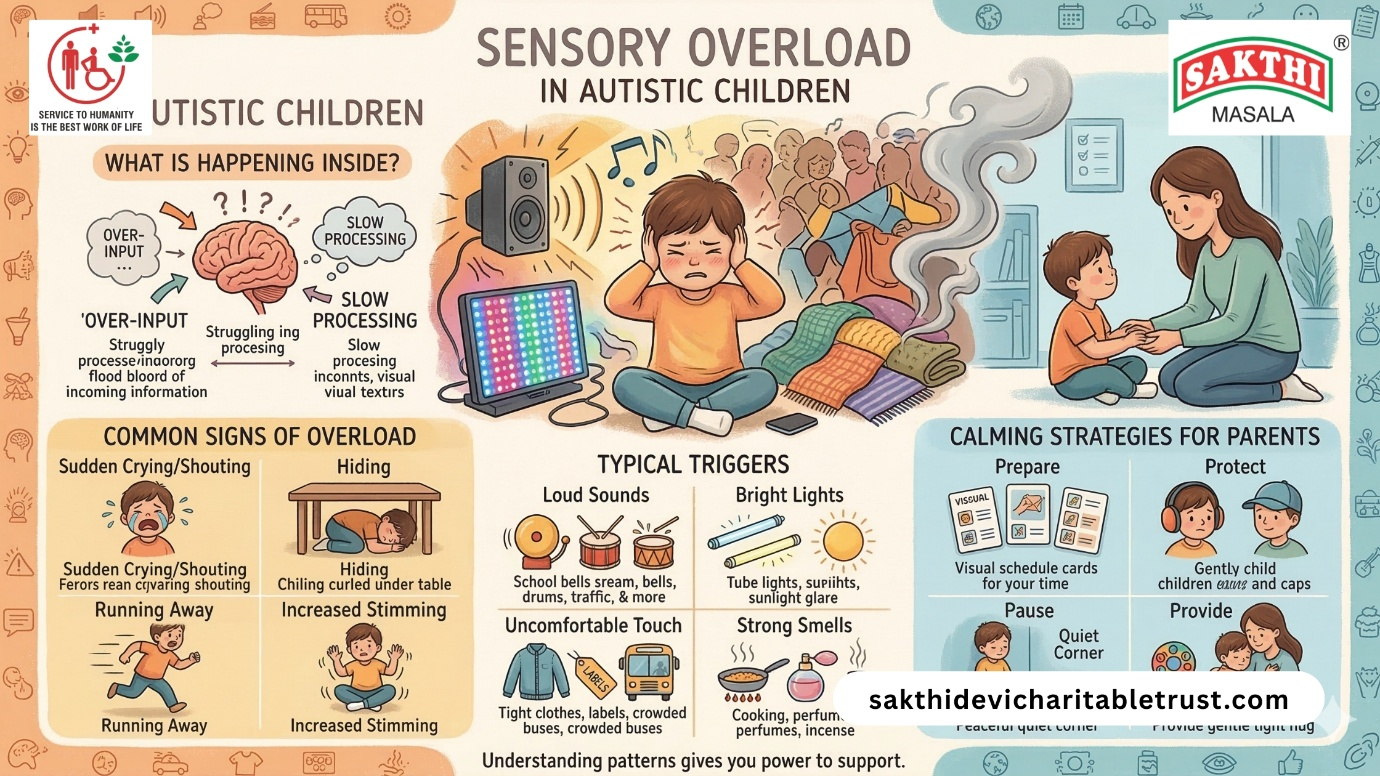
Sensory overload in autistic children happens when one or more senses receive too much input and the brain cannot process it at a comfortable speed. A normal classroom fan, a loudspeaker in a temple, or bright LED lights in a shop may feel physically painful. Some children are hypersensitive (over-responsive), so small sounds feel huge; others are hyposensitive (under-responsive) and seek extra movement or pressure; many move between the two depending on the day. These patterns are a core part of sensory issues in autism, not a separate problem.
Parents sometimes misread overload as stubbornness, tantrum or attention-seeking. But when you look closely, you will often see patterns in when and where your child struggles. Understanding these patterns gives you power: instead of fighting behaviour, you change the environment, timing or support around the child.
Common signs of sensory overload
Not every child shows overload in the same way, but many parents notice:
- Sudden crying, shouting or covering ears in noisy or crowded places
- Hiding under tables, behind furniture or in a corner
- Refusing to enter certain rooms or shops
- Clinging tightly, or trying to run away
- Increase in stimming (rocking, hand-flapping, spinning) to self-calm
Some signs are quieter:
- Shutting down, no eye contact, “switching off”
- Complaining of headache or tummy pain after outings
- Difficulty sleeping after a very busy day
Each of these can be a red flag that sensory overload in autistic children is happening, even if language is limited.
Typical triggers parents should watch for
In everyday life, overload often comes from:
- Sound: school bells, mics, traffic, crackers, temple drums, loud TV
- Light: tube lights, bright white LEDs, flickering fans, sunlight glare
- Touch: tight clothes, labels, certain fabrics, crowded buses, rough handling
- Smell and taste: strong incense, perfumes, cooking smells, school toilets
- Movement: crowded functions, jostling, fast bus rides, sudden lifts
To manage sensory issues in autism, parents can:
- Keep a simple “trigger diary” noting time, place, behaviour
- Watch body language before a meltdown (staring, pacing, frowning, covering ears)
- Share patterns with therapists and teachers so everyone can adjust
Calming strategies for parents
Calming does not mean “stopping all behaviour”; it means making the child feel safe again. Helpful strategies include:
- Prepare: Explain where you are going with pictures or simple words; use visual schedules.
- Protect: Carry ear defenders, cap / sunglasses, soft scarf or mask for smell.
- Pause: Step out to a quiet corner, verandah or empty classroom when you see early signs.
- Provide: Offer deep pressure (tight hug if the child likes it, weighted shawl), slow breathing, favourite fidget.
Over time, these steps reduce both the frequency and the intensity of overload episodes and make life smoother for the whole family.
How to Create a Calming Sensory Room for Autism at Home: Simple Ideas and Essentials
Why a sensory corner or room can change daily life
A sensory room for autism does not have to be a big, expensive room. It can be a small corner in a bedroom or hall that your child knows as their “safe space”. The idea is simple: when sensory issues in autism make the outside world too loud or bright, the child needs a predictable place where their senses can reset. For families in smaller homes in Erode, even a mat, curtain and one shelf can be enough if planned well.
A good sensory space balances calming input (soft light, gentle movement, deep pressure) and, when needed, controlled sensory activity (swing, sensory bin) so the child can either wind down or regulate themselves.
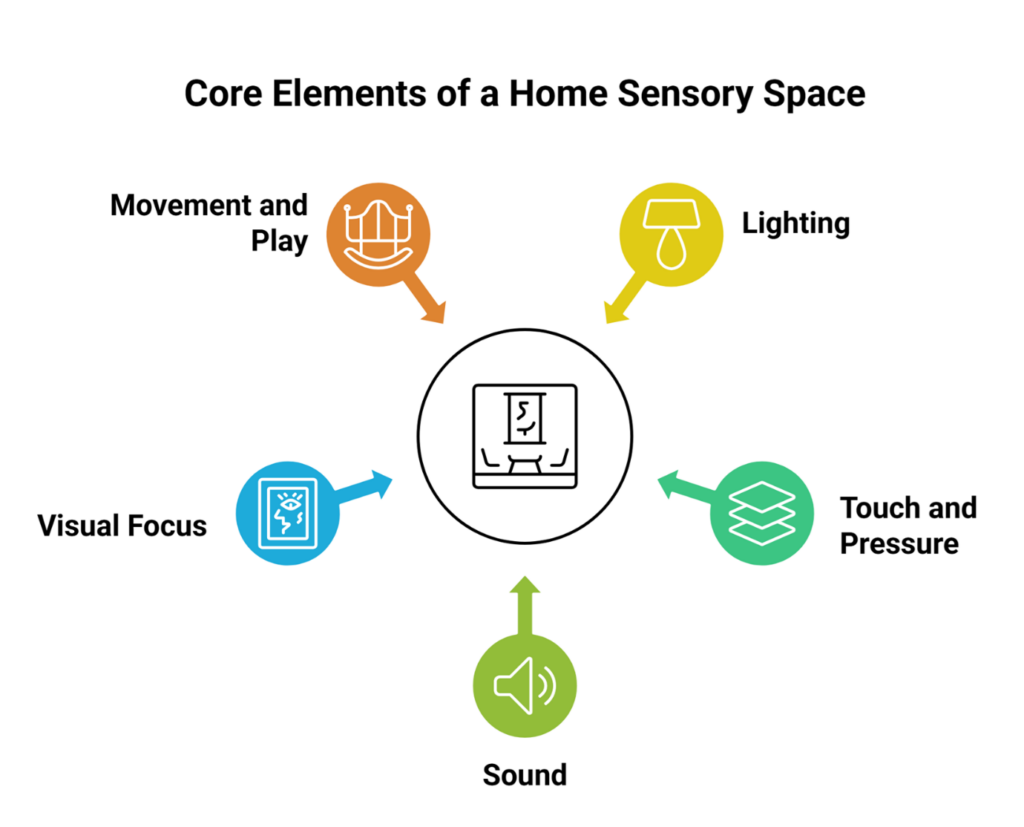
Core elements of a home sensory space
You can build a basic sensory room for autism with a few carefully chosen items:
- Lighting
-
- Warm, dimmable lamp instead of bright tube light
- Option for fairy lights or small colour-changing lamp
- Touch and pressure
- Soft rug or mat, cushions, heavy blanket or quilt
- A corner with soft toys or textured pillows
- Sound
- Small speaker for soft music or white noise
- Noise-cancelling headphones for loud days
- Visual focus
- One simple wall picture, lava / bubble style lamp if affordable
- Movement and play
- Space for rocking chair, therapy ball, or simple swing (if safe to install)
Keep colours soft and avoid clutter, because too many bright objects can worsen sensory overload in autistic children.
Simple planning steps for parents
Think in three steps:
- Observe your child
-
- Do they enjoy spinning lights or avoid them?
- Do they calm with deep pressure or prefer gentle rocking?
- Which textures do they touch often (soft, rough, rubbery)?
- Match tools to needs
-
- For sound sensitivity: curtains, rugs and soft surfaces that absorb noise
- For under-responsiveness: trampolines, movement games nearby
- For visual overwhelm: plain bedsheets as curtains, fewer bright posters
-
- Create rules together
- Explain that this space is for calming, not for punishment
- Keep screens limited or use only calming content
- Visit the space daily even when your child is calm, so they see it as positive
As you refine your sensory room for autism, involve therapists if possible; they can suggest specific tools like sensory bins, visual timers or balance equipment.
What Is Stimming in Autism? Causes, Examples and When Parents Should Worry
What stimming is (and what it is not)
Stimming is short for “self-stimulatory behaviour” and is closely linked to sensory issues in autism. Hand flapping, swaying, pacing, humming, and staring at spinning fans are examples of repetitive behaviors. For many autistic children, stimming is a natural way to handle big feelings, boredom, or a flood of sensory input. Fixing it is not always an issue.
Sometimes stimming increases during sensory overload in autistic children, because repeating a movement or sound can help them feel more in control. Parents often feel embarrassed in public, but understanding the “why” behind these actions can replace shame with compassion and better planning.
Common types of stimming linked to sensory needs
Parents may notice:
- Visual stimming– staring at spinning fans, lights, shadows, patterns
- Auditory stimming– repeating words, humming, making the same sound
- Movement stimming– rocking, jumping, pacing, spinning in place
- Tactile stimming– rubbing fabrics, tapping objects, playing with hair
- Oral stimming– chewing on clothes, pencils or toys
These relate back to sensory issues in autism: the child is either trying to block extra input or create input they crave.
Why stimming happens – sensory and emotional reasons
Stimming can serve different functions at different times:
- Calming down when anxious or afraid
- Coping with noisy or bright surroundings
- Showing excitement or joy
- Filling sensory “gaps” when the environment feels too quiet or dull
- Communicating discomfort when language is limited
Instead of stopping every stim, it helps to ask: “Is my child in pain, scared, bored, or overloaded right now?” Changing the environment, taking a quick pause, or providing a safer alternative to the stim (such as a fidget toy) can frequently have a significant impact.
When parents should seek extra help
Stimming itself is not dangerous, but you should talk to professionals if:
- The child hurts themselves (head-banging, biting, scratching hard).
- Stimming stops them from eating, sleeping or learning most of the day.
- The behaviour puts them in danger (running, climbing unsafe places).
- It leads to severe bullying or social rejection that affects their mental health.
In these cases, therapists can help modify the environment, teach alternative behaviours and reduce overload while respecting the child’s sensory needs. Addressing the underlying sensory issues in autism is often more effective than simply saying “stop that”.
Autism Friendly Colours for Kids: Calming Shades, Overstimulating Colours and Room Ideas
How colours connect to sensory comfort
Colours are not just decoration. For many autistic children, colours strongly affect mood, attention and comfort because of underlying sensory issues in autism. Some children love bright reds and yellows; others feel restless or irritated in such spaces. Soft blues, greens and neutral tones often feel safer, but every child is different.
When parents in Erode set up bedrooms, study corners or therapy spaces, colour choices can either reduce or increase sensory overload in autistic children. That is why thinking about wall paint, curtains, bedsheets, furniture and even school bag colours can be helpful.
Calming colour ideas
Research and practice with autistic children suggest that many respond better to:
- Soft blues and greens – linked with nature, sky and plants
- Muted pastels – gentle pink, lavender, peach
- Warm neutrals – beige, cream, light brown, off-white
- Limited contrast – not too many patterns in one place
Practical ways to use these:
- Choose one main calming colour for walls, keep others simple
- Use bedsheets and curtains in soft tones instead of cartoon-heavy, bright prints
- Add small colour accents with toys or cushions instead of all-over bright colours
These choices support a more peaceful sensory room for autism or a calming corner inside a regular bedroom.
Colours and patterns that can overstimulate
Not all bright colours are “bad”, but some combinations can worsen sensory overload in autistic children:
- Very bright reds and neon colours in large areas
- Strong contrasting stripes, chequered tiles, busy wallpaper
- Constantly flashing or colour-changing lights in sleeping or study areas
Instead of removing all bright colours, try:
- Keeping bright items small and movable (toys, cushions, posters)
- Avoiding bright lights directly in the child’s eyes
- Using dimmers or lamps instead of overhead white tube lights
Again, observing your child is key. If they avoid a room, squint, or become restless, the colour-light combination may be too strong for their sensory issues in autism.
Room ideas that link colours, stimming and safety
You can also use colour to support stimming and regulation:
- Create a “calm zone” with softer colours and minimal visual clutter where the child can go when they feel upset.
- Use a simple visual cue, like a blue mat, to signal “this is the calm space”, especially inside a sensory room for autism.
- For children who visually stim on fans or lights, choose fan designs and lamps that do not create strong flicker or shadow patterns.
This way, you are not fighting the child’s behaviour; you are designing the environment so that fewer triggers appear in the first place.
Common mistakes parents and schools make (and how to avoid them)
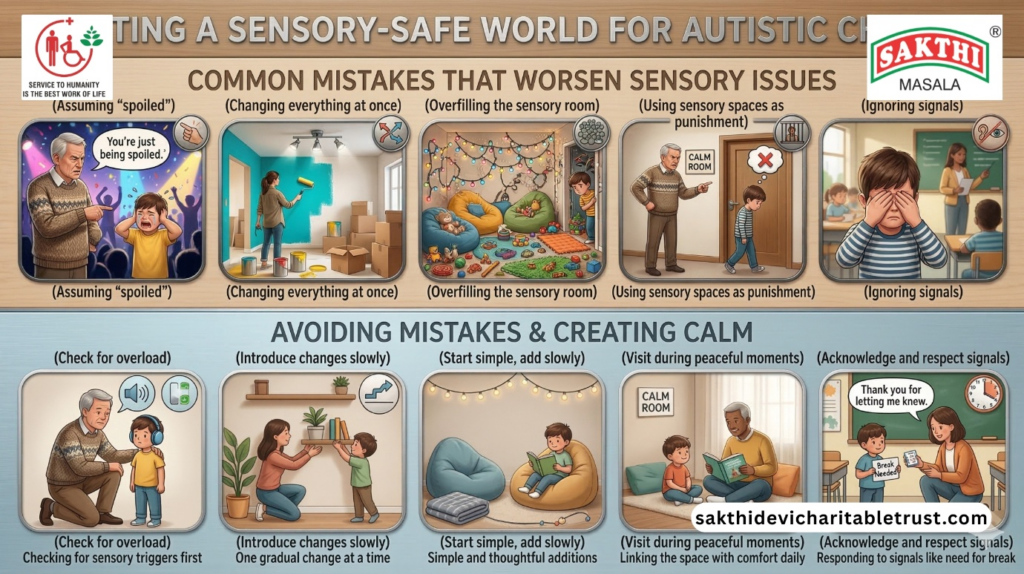
Even caring adults can accidentally make sensory issues in autism worse. Being aware of common mistakes can save a lot of stress:
- Assuming the child is “spoiled” instead of overloaded
-
- When a child cries at a function, adults may scold instead of checking for noise or light triggers. This increases fear and does not solve sensory overload in autistic children.
- Changing everything at once
- Painting walls, adding new lights and new furniture together can confuse the child. Change one or two things, observe, then continue.
- Over-filling the sensory room
- Buying too many lights, toys and textures turns a sensory room for autism into another overwhelming space. Start simple; add tools slowly as you see what works.
- Using sensory spaces as punishment
- Sending a child to the “calm room” only when they misbehave makes them fear the space. Instead, visit it daily during peaceful moments so they link it with comfort.
- Ignoring the child’s own signals
- Some children try to leave rooms, cover eyes or complain of pain, but adults insist they “adjust”. Over time, this can increase anxiety and problem behaviours.
Avoiding these mistakes helps the child trust you and feel safer in their sensory world.
How modern tools and local support can help
Today, parents have access to many tools and services that make managing sensory issues in autism easier:
- Noise-cancelling headphones, soft eye masks, weighted shawls or lap pads
- Visual schedules on mobile apps or printed charts
- Simple smart bulbs with adjustable brightness and warmth
- Online parent communities sharing ideas for sensory room for autism setups
However, tools alone are not enough. The right school and therapy support are equally important. In and around Erode, parents often look for:
- Special schools that understand sensory needs in classroom design
- Early intervention centres that include sensory-based therapies
- Rehabilitation centres offering occupational therapy, physiotherapy and speech therapy in one place
When you combine home changes with professional guidance, you get a more complete response to sensory issues in autism instead of a patchwork of random solutions.
Creating kinder sensory worlds for autistic children
Sensory issues in autism make ordinary environments feel extraordinary – sometimes exciting, sometimes unbearable. For a child, this can mean that a simple trip to school or market feels like standing under a loudspeaker with bright lights pointed at their face. When parents understand sensory overload in autistic children, stimming, colour sensitivity and the role of a well-planned sensory room for autism, they can move from constant firefighting to calm, proactive support.
To begin, you don’t need a large budget. Small steps – dimmer lights, quieter spaces, soft textures, visual schedules, and one safe corner – can give your child a sense of control and safety. Over time, you can add tools and habits that suit your child’s unique pattern: maybe more movement, maybe more deep pressure, maybe less visual clutter. The goal is not to remove all stimming or difference, but to reduce distress so your child can learn, play and connect more freely.
For families in Erode and nearby areas, it also helps to know that you are not alone. Local services that understand special education and sensory needs can walk this journey with you. Sakthidevi Charitable Trust, through our special schools, autism school, early-intervention centre and rehabilitation services, supports children who struggle with sensory issues in autism as well as their parents, using structured therapies, music, play and counselling. If you feel your child is overwhelmed by sights, sounds or touch, or you need guidance on routines, colours or a sensory room for autism, visit or contact Sakthidevi Charitable Trust to explore how our team can help your family move towards calmer, more confident days.
FAQ
- What are common sensory issues in autism that parents should notice early?
Common sensory issues in autism include strong reactions to noise, lights, touch, smells or movement, such as covering ears, avoiding certain clothes, or getting upset in crowded places. Some children also seek extra input, like spinning, jumping or squeezing objects often. If these patterns affect daily routines like school, eating or outings, it may be time to talk with your paediatrician or therapist for an assessment and guidance. - How is sensory overload in autistic children different from a normal tantrum?
A tantrum usually has a goal — the child wants something, and behaviour stops when they get it. Sensory overload in autistic children happens when their brain cannot handle too much input; they may cry, scream or shut down even without wanting anything specific. Overload signs often match triggers like noise or lights, and the child may look scared or in pain. Calm, quiet spaces and reducing triggers help more than punishment. - Do all autistic children need a dedicated sensory room for autism at home?
Not every child needs a separate room, but almost all benefit from a small “calm corner” designed like a sensory room for autism. This could be one corner with soft light, cushions and a few chosen tools like fidgets or weighted blankets. The key is that the space feels predictable and safe. Even in small houses in Erode, parents can use curtains, mats and a shelf to create a simple sensory zone that helps during overload. - Can sensory issues in autism improve over time?
Yes, many children show improvement when their environments and routines match their sensory needs and they receive consistent therapy. As sensory issues in autism are understood and supported, children often handle more situations without meltdowns. Occupational therapy, structured practice in school and home, and a well-planned sensory corner or room can all help. Progress may be slow and uneven, but small gains add up over years. - Should parents try to stop all stimming behaviours in autistic children?
No. Stimming is often a natural way for autistic children to manage sensory issues in autism and emotions. It should only be changed when it is unsafe, extremely disruptive, or blocks daily life. In those cases, professionals recommend finding safer, more acceptable alternatives and reducing triggers like noise or bright light. Respecting harmless stims while shaping dangerous ones is a more balanced and kinder approach for the child.

Leave a Reply