

How Better School Infrastructure in Rural Areas Improves Learning Outcomes
Creating strong school infrastructure in rural areas is one of the simplest ways to help children learn better without changing the syllabus or exams. When classrooms are bright, safe and welcoming, students can focus on lessons instead of heat, noise or discomfort. Parents also feel more confident sending their children, especially girls, to a school that looks cared for. For headmasters and teachers in rural blocks, this means that every small change in buildings or basic facilities can directly support better learning outcomes and attendance.
Why Infrastructure Matters for Learning
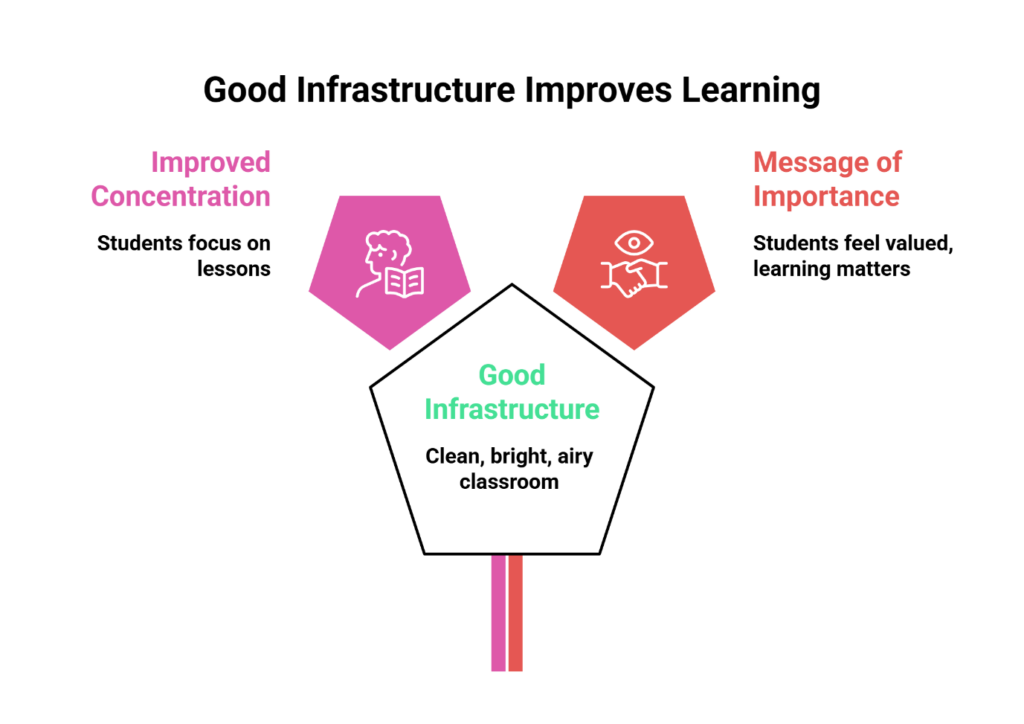
Good infrastructure is not a luxury. It is a foundation.
A child who sits on a broken bench in a dark room will struggle to concentrate, even with the best teacher. In contrast, a clean classroom with proper light, air and seating sends a clear message: “You are important, and your learning matters.” This is the heart of improving learning environment in government schools.
Many NGOs for rural education in Erode, such as Sakthidevi Charitable Trust, work with schools to improve classrooms, libraries and basic facilities that help students focus on learning.
Key Elements of School Infrastructure in Rural Areas
When we talk about school infrastructure in rural areas, we are looking at many small parts working together:
- Safe buildings with solid roofs and floors
- Proper blackboards or whiteboards
- Usable toilets for boys and girls
- Clean drinking water
- Simple playground or open space
- Basic electrical wiring and fans where possible
None of these are fancy items, but when they are missing, learning suffers every day.
Rural School Renovation and Development: Where to Start?
Many schools dream big but do not know how to begin with rural school renovation and development. A simple, step-by-step approach works best:
- First, fix safety issues like broken steps, loose tiles or damaged wiring.
- Next, improve light and air with clean windows, light paint and working fans.
- Then, upgrade learning tools: boards, charts, shelves for books.
Even small paint work and basic repairs can change how children feel about their school and how teachers feel about their workspace.
How Better Spaces Change Student Behaviour
A better school infrastructure in rural areas can:
- Reduce absenteeism because children feel more comfortable in class.
- Improve attention spans as students are less distracted by heat, noise or crowding.
- Increase pride; children are more likely to keep the campus clean when it looks good.
- Encourage parents to visit the school and stay involved in their child’s progress.
When classrooms, corridors and toilets are maintained well, improving learning environment in government schools becomes a daily habit, not a one-time project.
How Sakthidevi Charitable Trust Supports Better Learning Spaces
In and around Erode, Sakthidevi Charitable Trust works to strengthen school infrastructure in rural areas through practical support linked with education. Through its Vazhikatti-style initiatives, the Trust helps government schools with libraries, reading spaces, basic facilities and student-friendly learning environments that make children feel safe and motivated to learn every day. If you want to see how real-life rural school renovation and development can boost learning, explore Sakthidevi Charitable Trust’s education-focused services and the impact they create for government school students in and around Erode.

Leave a Reply